
The Best Time to Visit Rocky Mountain National Park (And When I’d Go Again) Updated 2026
Elk bugling in the fog, aspens turning solid gold, and the summer crowds already gone. That’s September.
I’ve been to Rocky Mountain National Park three times now, all on Colorado road trips, and every single time I’ve come in the second half of September. Not because I didn’t consider other months. Because I did, and nothing else comes close.
The best time to visit Rocky Mountain National Park is late September. The elk rut is in full swing in Moraine Park, the aspens are turning gold across the entire Bear Lake Road corridor, both mountain roads are still open, and the summer crush has thinned out enough that you can actually find a parking spot before 9 a.m.
That’s my answer. But Rocky Mountain is really four different parks depending on when you show up, and the right month for you depends on whether you’re chasing wildflowers, elk, snowshoe trails, or an empty parking lot at Bear Lake.
In this guide I’ll walk through every season and every month, with real temperatures, the 2026 timed entry dates, and the honest stuff most guides skip, like what March actually looks like up there. Let’s get into it.
Short on Time
In a Rush?
Here are our favorite places to stay near Rocky Mountain National Park
Advertising: affiliate links. No extra cost to you.
What’s In This Guide
The Best Time to Visit: My Short Answer
Rocky Mountain National Park Month by Month
Spring: Snowmelt, Waterfalls and Mud
Summer: Full Access, Full Parking Lots
Fall: Why This Is When I Go
Winter: Quiet, Cold, Limited
When to Avoid Rocky Mountain National Park
Timed Entry Permits and How They Affect Your Timing
What It Costs by Season
Get Ready for Your Trip to Colorado
Frequently Asked Questions
The Best Time to Visit Rocky Mountain National Park: My Short Answer
The second half of September through the first week of October. Every time. Here’s why, in one paragraph.
The elk rut is the biggest wildlife event of the year, and it peaks in late September. Bull elk bugling across Moraine Park in the morning fog is one of the great wildlife spectacles in North America and it is close to guaranteed if you show up early enough. At the same time, the aspens are turning across the entire park, Bear Lake Road corridor looks like it’s on fire in gold, and both Trail Ridge Road and Old Fall River Road are still open. The summer crowds have gone home but the roads haven’t closed yet. That’s the window, and it lasts about three weeks.
If fall doesn’t work for you, late June through early July is the runner up. Wildflowers are at their peak, waterfalls are running at full volume from the snowmelt, and Trail Ridge Road has just opened for the season. More crowded than September, but everything is green and alive.
Rocky Mountain National Park Month by Month
These are average high temperatures for the Estes Park area at 7,500 feet. Subtract 15 to 20 degrees for the alpine sections of Trail Ridge Road, and add wind. Always add wind.
Good
Mixed
Poor
37°F
Jan
38°F
Feb
45°F
Mar
53°F
Apr
62°F
May
73°F
Jun
79°F
Jul
77°F
Aug
69°F
Sep
57°F
Oct
44°F
Nov
37°F
Dec
Average daily highs, Estes Park area (7,500 ft). Source: NOAA 1991 to 2020 climate normals.
Rocky Mountain National Park in Spring: Snowmelt, Waterfalls and Mud
Spring at a Glance
Months: April and May
Highs: 53 to 62°F in Estes Park
Trail Ridge Road: Closed, usually opens late May or early June
Crowds: Low
Best for: Waterfalls, solitude, lower prices
I’ll be straight with you. April and early May are the park’s awkward months. The snowpack is melting but not gone, lower trails alternate between mud and ice, and the high country is still buried. March and April are typically the snowiest months on this side of the divide, and the storms keep coming well into May, which surprises people every single spring.
The upside: the waterfalls. Alberta Falls, Chasm Falls, and every cascade in the park run at full volume from the snowmelt. Late May can be genuinely terrific if the melt cooperates. Elk and mule deer are in the valleys with their calves, moose calving season starts in the Kawuneeche Valley on the west side, and you’ll have lower elevation trails almost to yourself.
Tip: Pack waterproof boots, check trail conditions on the NPS website before you commit to anything above 10,000 feet, and treat every spring forecast as a suggestion rather than a promise.
Rocky Mountain National Park in Summer: Full Access, Full Parking Lots
Summer at a Glance
Months: June, July and August
Highs: 73 to 79°F in Estes Park
Trail Ridge Road: Open
Old Fall River Road: Opens early July
Crowds: High, timed entry permit required
Best for: Wildflowers, high elevation hikes, families
Summer is when the whole park is on the table. Trail Ridge Road is open, all the trailheads are accessible, the shuttles are running, and the visitor centers are fully staffed. It’s also when 80 percent of the park’s 4.2 million annual visitors show up.
Late June is the wildflower peak, especially in the subalpine meadows and along the tundra sections of Trail Ridge Road. July is the warmest month, the alpine wildflowers are still blooming, and the full trail network is clear. August stays warm and gives you the longest possible days without the school holiday rush of July.
The catch: afternoon thunderstorms are nearly daily from mid June through August, usually building between noon and 2 p.m. and sometimes arriving with hail or lightning. Plan to be off exposed ridgelines and above treeline areas by early afternoon. This is not optional.
Tip: If you’re coming in summer, the morning hours are everything. Get to the trailheads before 8 a.m. for the best weather window, the best parking, and the best light. By 10 a.m. the lots along Bear Lake Road are often closed.
Rocky Mountain National Park in Fall: Why This Is When I Go
Fall at a Glance
Months: September and October
Highs: 57 to 69°F in Estes Park
Trail Ridge Road: Open until late October
Old Fall River Road: Closes mid October
Crowds: Medium (weekdays manageable, weekends busy)
Best for: Elk rut, fall colors, photography, fewer crowds than summer
This is where I stop pretending to be objective. Fall in Rocky Mountain National Park is the most impressive thing I’ve seen anywhere in the American West, and I’ve driven through a lot of it.
The Elk Rut in Moraine Park
The elk rut runs from roughly mid September through mid October, and it is the reason the park exists in fall. Bull elk bugling across the meadows in Moraine Park and Horseshoe Park, cows in tight groups, and if you’re lucky, two bulls locking antlers in front of you. We watched exactly that happen, and the sound of 1,400 combined pounds of elk crashing through wet grass at 7 in the morning is something you carry with you for a long time.
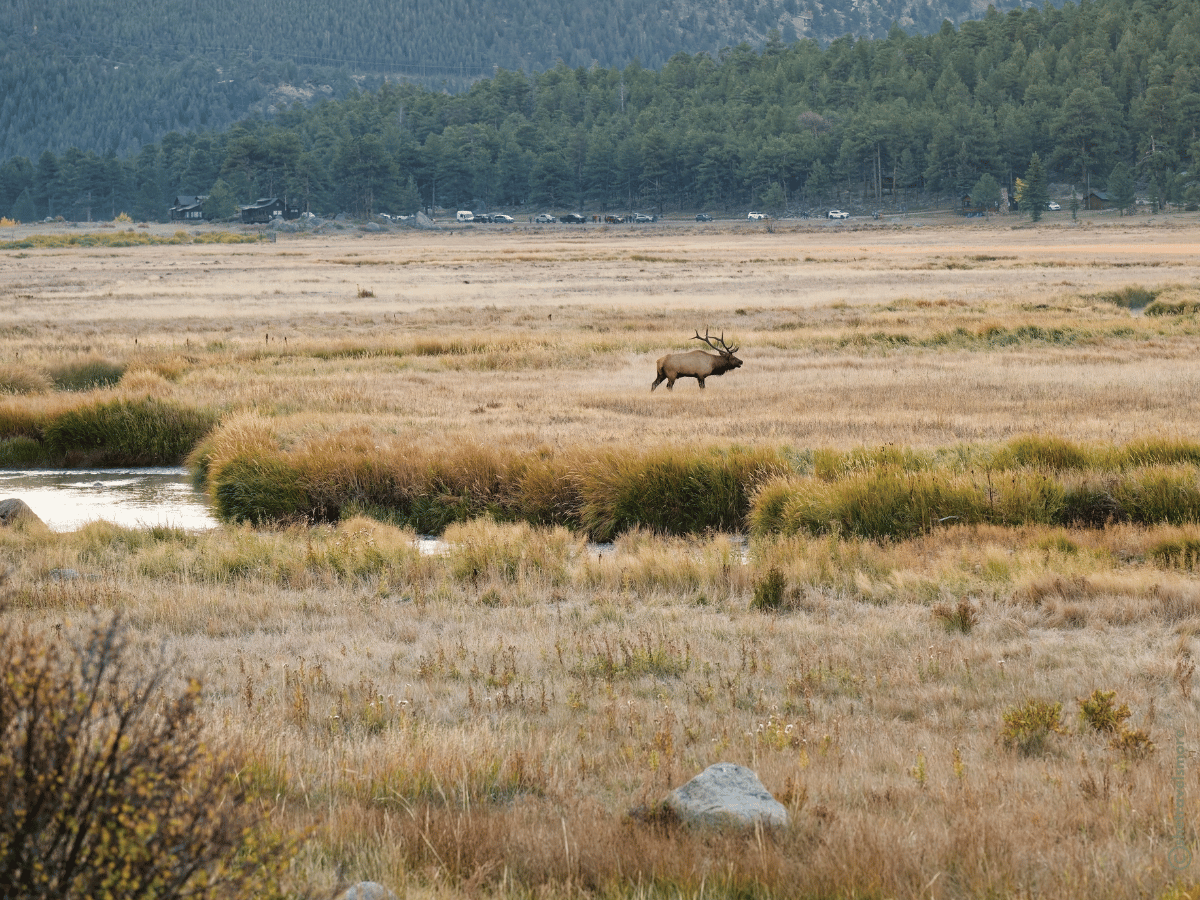
And it’s not just inside the park. In Estes Park itself, elk walk through town like they own it. In September they do.
When the Aspens Peak and Where to Find Them
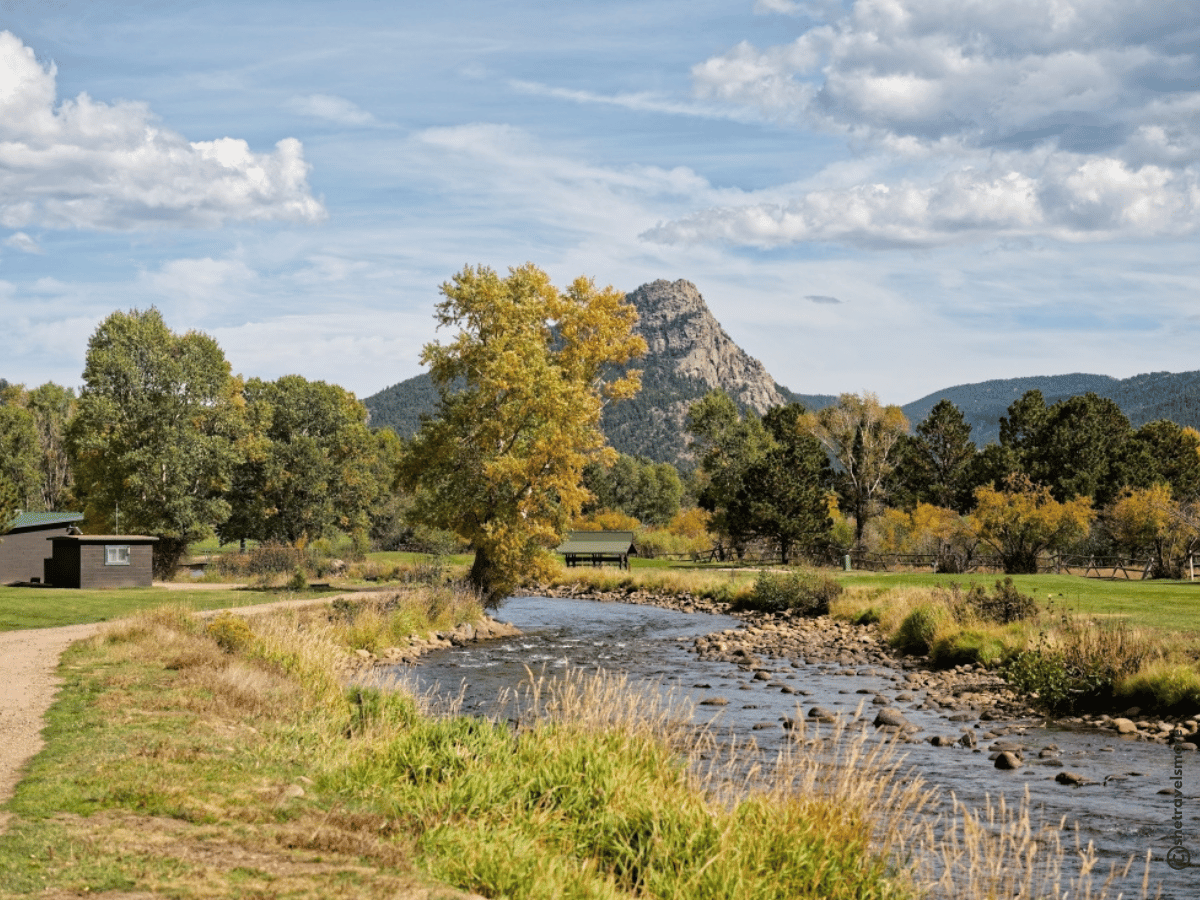
Aspen foliage in Rocky Mountain usually peaks between September 18 and September 28, though it shifts a few days in either direction depending on the year. The higher elevations turn first. By the last week of September the entire Bear Lake Road corridor is gold, the slopes along Trail Ridge Road are lit up, and the contrast against the spruce and the fresh snow on the peaks is the reason every photographer in Colorado is standing next to you at Sprague Lake before sunrise.
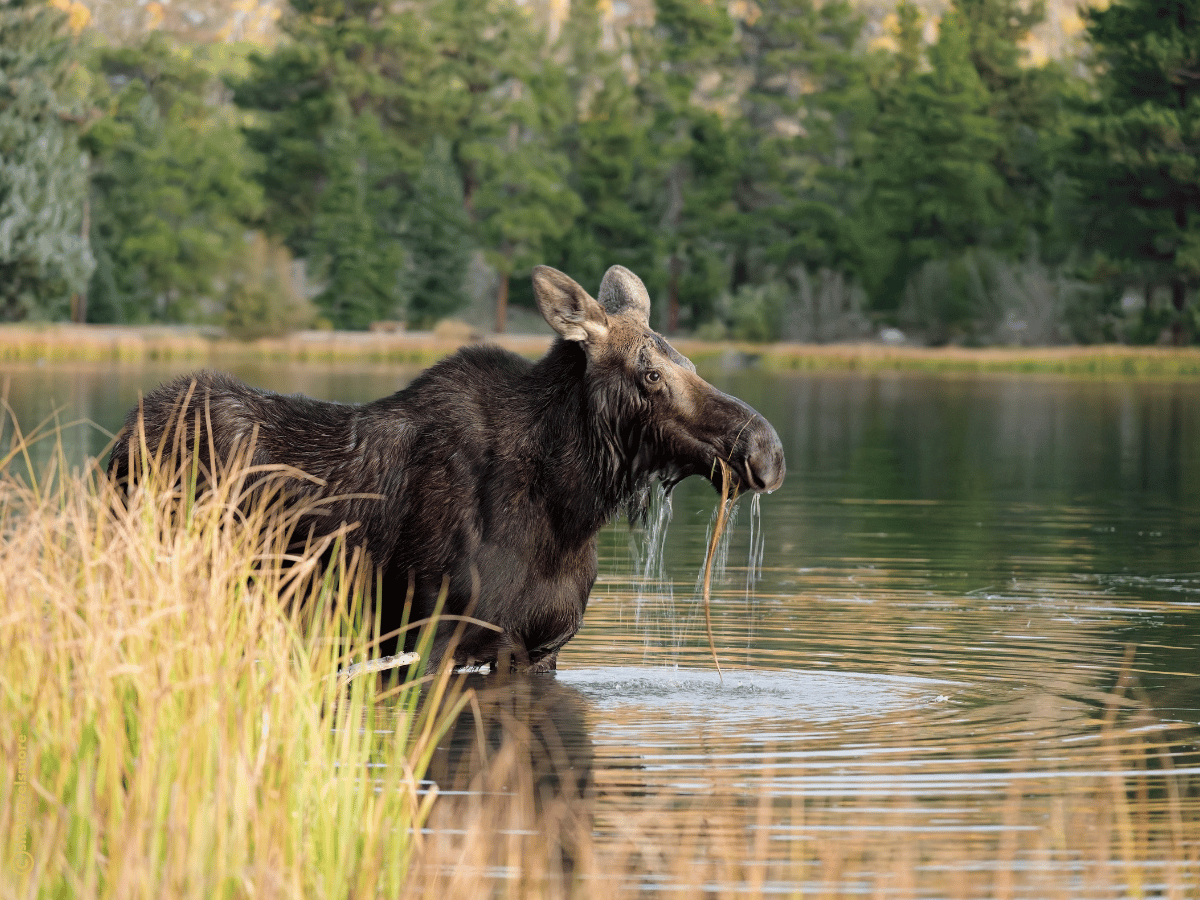
Moose at Sprague Lake Before Sunrise
We got to Sprague Lake in the dark. Peak fall season, parking lot already half full, headlamps moving along the trail. And when we reached the water he was already there. A moose, knee deep, head down, calmly pulling algae off the bottom. Nobody talked. It was the single best wildlife encounter of the entire trip.
When Old Fall River Road and Trail Ridge Road Close for the Season
This is the detail that determines whether October works for you. Old Fall River Road, the historic unpaved one way road that makes the crossing so special, closes in mid October. Trail Ridge Road usually stays open for through traffic until late October. Once both are closed, the alpine half of the park is gone until next summer.
So the real fall window is mid September through mid October. Three to four weeks where everything lines up at once. That’s it.
► Click here for my complete 3 day itinerary for fall in Rocky Mountain National Park
Rocky Mountain National Park in Winter: Quiet, Cold, Limited
Winter at a Glance
Months: November through March
Highs: 37 to 45°F in Estes Park, much colder at altitude
Trail Ridge Road: Closed to through traffic
Crowds: Very low
Best for: Snowshoeing, solitude, lower prices
Winter Rocky is a completely different park. Trail Ridge Road is closed, Old Fall River Road is closed, the Alpine Visitor Center is closed, and the west side is only accessible by driving all the way around through Granby. The park is open 24 hours a day, 365 days a year, but “open” in December means the lower east side roads and whatever trails you can reach in snowshoes or cross country skis.
If that sounds limiting, it also means you might be the only person on the trail. Snowshoeing to Bear Lake on a clear January morning, fresh tracks in the snow, absolute silence, is a version of the park that summer visitors never see. Elk are still around, mule deer are in the lower valleys, and the light at that latitude in winter is golden and low and beautiful.
The downside is real: roads can close without warning, chains may be required, and the combination of altitude and cold is genuinely dangerous if you’re not prepared. I haven’t done a winter trip here yet, but it’s on my list for the silence alone.
When to Avoid Rocky Mountain National Park
There’s no month where the park is bad, but there are windows where what you get doesn’t match what you expect. Here are three.
Bear Lake Road on a summer weekend. Fourth of July week and any Saturday from late June through August. The lots close by 9 a.m., the shuttle lines are long, and you spend more time managing logistics than looking at mountains. Come midweek instead.
Late October and November. Trail Ridge Road has closed, the fall colors are done, and winter hasn’t fully arrived yet. You get cold, brown, and limited access. The park is in between seasons and the town of Estes Park feels the same way.
April through early May if you’re expecting hiking. Mud season. Lower trails are slushy, higher trails are buried, and the mountain roads are closed. If you’re coming specifically for snowshoes or waterfall photography this can still work, but if you expect summer-style trail access you’ll be disappointed.
Timed Entry Permits and How They Affect Your Timing
In 2026 the timed entry system runs from May 22 through mid October, and it shapes when and how you visit more than anything else. There are two versions.
Timed Entry + Bear Lake Road: covers the Bear Lake corridor plus the rest of the park. Required from 5 a.m. to 6 p.m.
Standard Timed Entry: covers everything except Bear Lake Road. Required from 9 a.m. to 2 p.m. only. Enter before 9 a.m. or after 2 p.m. and you don’t need one at all.
Both give you a two hour entry window, and once you’re in you can stay all day. They cost $2 per vehicle in booking fees on Recreation.gov. Permits release monthly at 8:00 a.m. Mountain Time, and there’s a second release at 7:00 p.m. the evening before for next day slots. The Bear Lake ones go fast in fall. Set two alarms.
A reservation is not an entrance pass. You still need a park pass on top: $35 per vehicle for seven days, or $80 for America the Beautiful. Non US residents aged 16 and over now pay an extra $100 per person unless they hold an annual pass.
Outside the timed entry season (late October through mid May), you just drive in and pay the entrance fee. No reservation needed.
What It Costs to Visit Rocky Mountain National Park by Season
The park itself is cheap. It’s lodging and the rental car that move the number, and both swing hard by season. Here’s a realistic picture for two people, three days and two nights.
| Expense | Summer | Fall | Winter |
|---|---|---|---|
| Park pass (7 day) | $35 | $35 | $35 |
| Timed entry permits | $4 | $4 | n/a |
| Rental car, 3 days | $180 | $240 | $110 |
| Two nights in Estes Park | $360 | $450 | $200 |
| Gas | $50 | $50 | $50 |
| Food, 3 days for two | $240 | $240 | $200 |
| Total for two | $869 | $1,019 | $595 |
💡 Fall is the most expensive season because of the lodging. Estes Park has limited capacity and peak foliage rates are real. Book early and you’ll land closer to summer prices. Wait until September and you’ll pay a premium for whatever is left.
Should You Stay in Estes Park or Grand Lake?
Estes Park if you’re only picking one. It sits right at the east entrance, ten minutes from Bear Lake Road, and has far more restaurants, shops and hotels than Grand Lake. Every early morning on this itinerary starts on that side.
Grand Lake on the west side is the better place though. Quieter, prettier, far better for moose, and it feels like a town rather than a gateway. If you can stretch to three nights, do two in Estes Park and one in Grand Lake. That’s the version of this trip I wish we’d booked.
► Click here to read our full guide on where to stay in Estes Park
Get Ready for Your Trip to Colorado
Book Your Accommodation
For Estes Park and Grand Lake I use Booking.com*. Free cancellation on most rooms matters a lot here, because permit windows and weather both change your plans. I also cross check on Hotels.com* and Expedia*, because Estes Park has limited inventory in foliage season and some places only show up on one platform.
If you’re traveling as a group or want a full cabin with a kitchen, check Vrbo*. There are some gorgeous mountain cabins around Estes Park and Grand Lake that hotels can’t match. For comparing rates across all of them in one search, Kayak* saves a lot of tab switching.
Two more I check when the big sites show sold out: Agoda* sometimes surfaces rooms the others miss.
Book Your Flights and Rental Car
For flights and rental cars into Denver I compare on Kayak*. Book the car early for fall, because Denver runs tight in foliage season and prices climb steeply from mid September.
Book Tours and Activities
For guided hikes, wildlife tours and anything in Estes Park, GetYourGuide* is where I look first. Worth knowing: guided tour groups get into the park without a timed entry permit, so a tour can be a real workaround on a sold out day.
Advertising: affiliate links. No extra cost to you.
Best Time to Visit Rocky Mountain National Park: Frequently Asked Questions
🍂 What is the least crowded month to visit Rocky Mountain National Park?
January and February are the quietest by far. You’ll have trails nearly to yourself, but Trail Ridge Road and the Alpine Visitor Center are closed and you’ll need snowshoes or cross country skis for most routes. If you want low crowds with full access, aim for late September on a weekday.
📅 When is the best month for wildflowers?
Late June through mid July. The subalpine meadows bloom first, then the alpine tundra along Trail Ridge Road follows in July. Timing varies by snowpack, so heavier snow winters push the bloom later.
🐦 When is the elk rut in Rocky Mountain National Park?
Mid September through mid October, peaking in late September. Moraine Park and Horseshoe Park are the two best viewing spots. Go early morning or right before sunset, and stay well clear of the bulls.
🍃 When do the aspens change color in Rocky Mountain National Park?
Peak fall colors typically hit between September 18 and September 28, starting at higher elevations and working down. By the first week of October the lower valleys are still golden but the peak is usually past. Check local foliage reports in the days before your trip, because the window is narrow.
☐️ Is Rocky Mountain National Park worth visiting in winter?
Yes, if you know what you’re getting. Snowshoeing to Bear Lake on a clear morning with fresh tracks and total silence is a version of the park that summer visitors never see. But most of the park is inaccessible, roads can close without warning, and the cold at altitude is no joke. Come prepared or don’t come at all.
🚚 When does Trail Ridge Road open and close?
Trail Ridge Road usually opens in late May or early June and closes to through traffic in late October. Old Fall River Road, the unpaved one, is narrower: typically early July to mid October. Both depend entirely on the snowpack and can shift by weeks in either direction. Check the NPS website the week of your trip.
Final Thoughts on the Best Time to Visit Rocky Mountain National Park
Rocky Mountain is genuinely four different parks depending on when you show up, and there’s no wrong answer. But if you’re asking me, and you are, I’m telling you to come in the last two weeks of September. Get up before the sun, drive to Sprague Lake in the dark, and be standing at the water when the light arrives. You’ll hear elk bugling in the valley behind you, the aspens will be gold on both sides of the road, and the moose might already be in the lake. That’s the version of this park I fell in love with.
Check availability in Estes Park here*, because fall books out earlier every year. Happy travels.
Check Out My Other Colorado Travel Guides
Rocky Mountain National Park 3 Day Itinerary: What I Loved and What I’d Do Differently
Where to Stay in Estes Park: My Top Lodges and Hotels Near Rocky Mountain National Park
Is Rocky Mountain National Park Worth Visiting: My Honest Review
Best Things to Do in Rocky Mountain National Park: My Favorites Plus 2 Hidden Gems
Colorado Travel Guide: Best Road Trips and Mountain Towns