
The 9 Best Things to Do in Rocky Mountain National Park + 2 Hidden Gems (Updated 2026)
The famous stuff is famous for a reason. The hidden stuff is why I keep coming back.
Rocky Mountain National Park has a list of things everyone does and a much shorter list of things almost nobody does, and some of the best moments I’ve had in this park came from the second list. The moose at Sprague Lake before sunrise wasn’t on any Top 10 I’d read. Driving Old Fall River Road, the unpaved original road from 1920, didn’t show up on a single listicle I’d bookmarked before the trip. Both were better than Bear Lake on a Saturday, and I say that as someone who drove past Bear Lake on a Saturday.
So here are the best things to do in Rocky Mountain National Park, the ones I actually did, ranked by how much they stuck with me afterwards. I’ve added two hidden gems at the end that most visitors drive straight past, and honestly those might be the most useful part of this whole guide.
Let’s get into it.
Short on Time
In a Rush?
Here are our favorite places to stay near Rocky Mountain National Park
Advertising: affiliate links. No extra cost to you.
What’s In This Guide
The 9 Best Things to Do in Rocky Mountain National Park
2 Hidden Gems Most Visitors Miss
What You Can Honestly Skip
Quick Guide to Permits and Timing
Get Ready for Your Trip to Colorado
Frequently Asked Questions
The 9 Best Things to Do in Rocky Mountain National Park
1. Drive Trail Ridge Road Across the Continental Divide
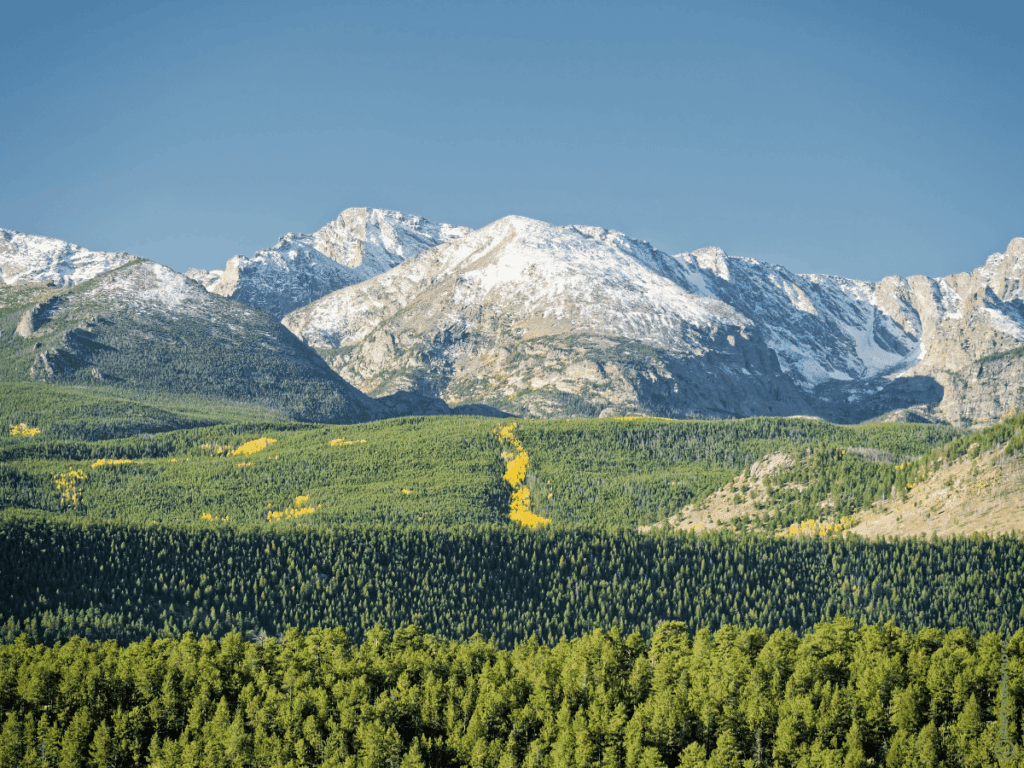
The highest continuous paved through road in the country. It tops out at 12,183 feet, crosses the Continental Divide, and takes you from dense forest through alpine tundra where nothing grows taller than your ankle. Pull over constantly. The temperature drops 20 degrees from Estes Park to the top, so bring a jacket even in August.
Tip: Open late May through late October. Budget at least two hours for the crossing, more if you’re stopping, which you should be.
2. Watch the Elk Rut in Moraine Park
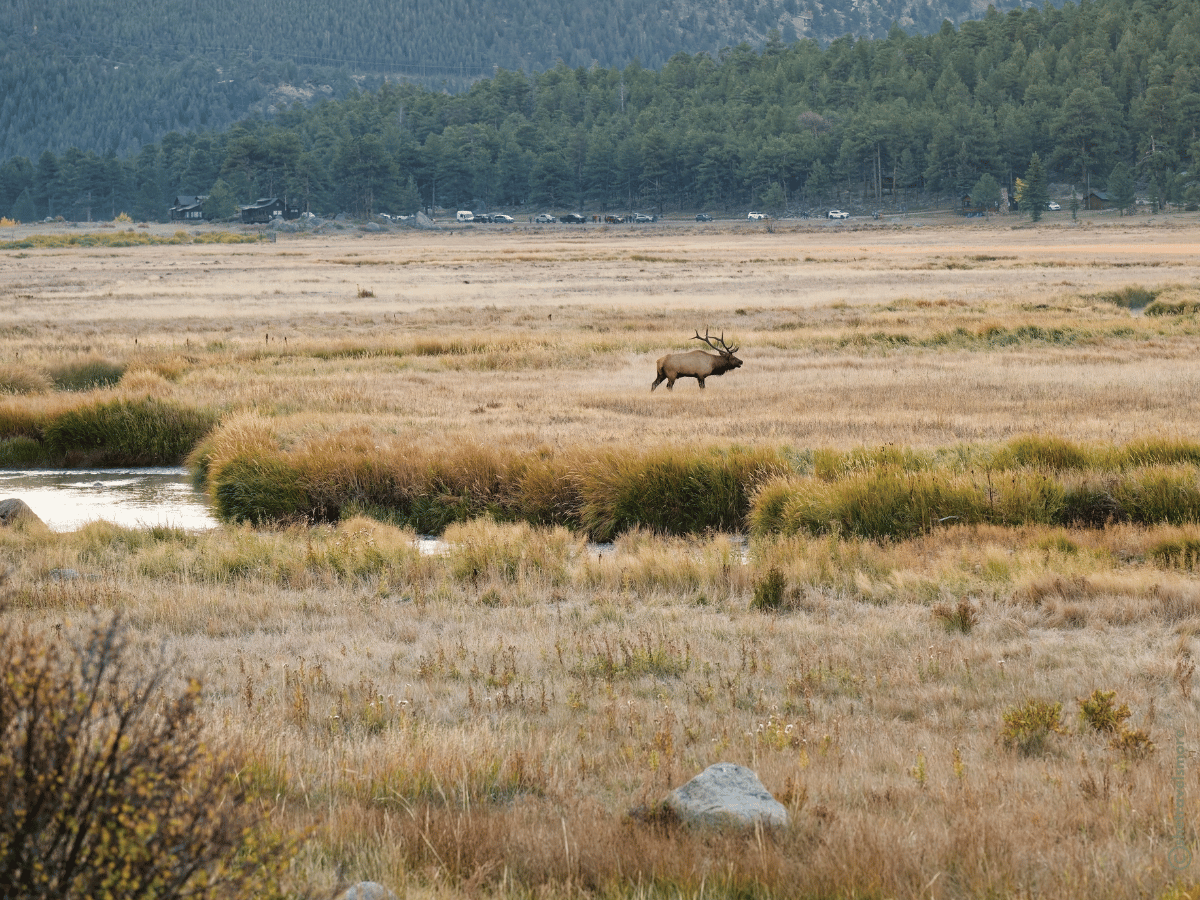
If you’re here in September or early October, this is the reason. Bull elk bugling across the meadow in the morning fog, cows gathered in tight groups, and if you’re lucky, two bulls locking antlers in front of you. We watched exactly that happen and the sound of it stays with you. Moraine Park and Horseshoe Park are the two best spots. Go early morning or right before sunset, and never put yourself between a bull and his cows.
3. Catch Sunrise at Sprague Lake
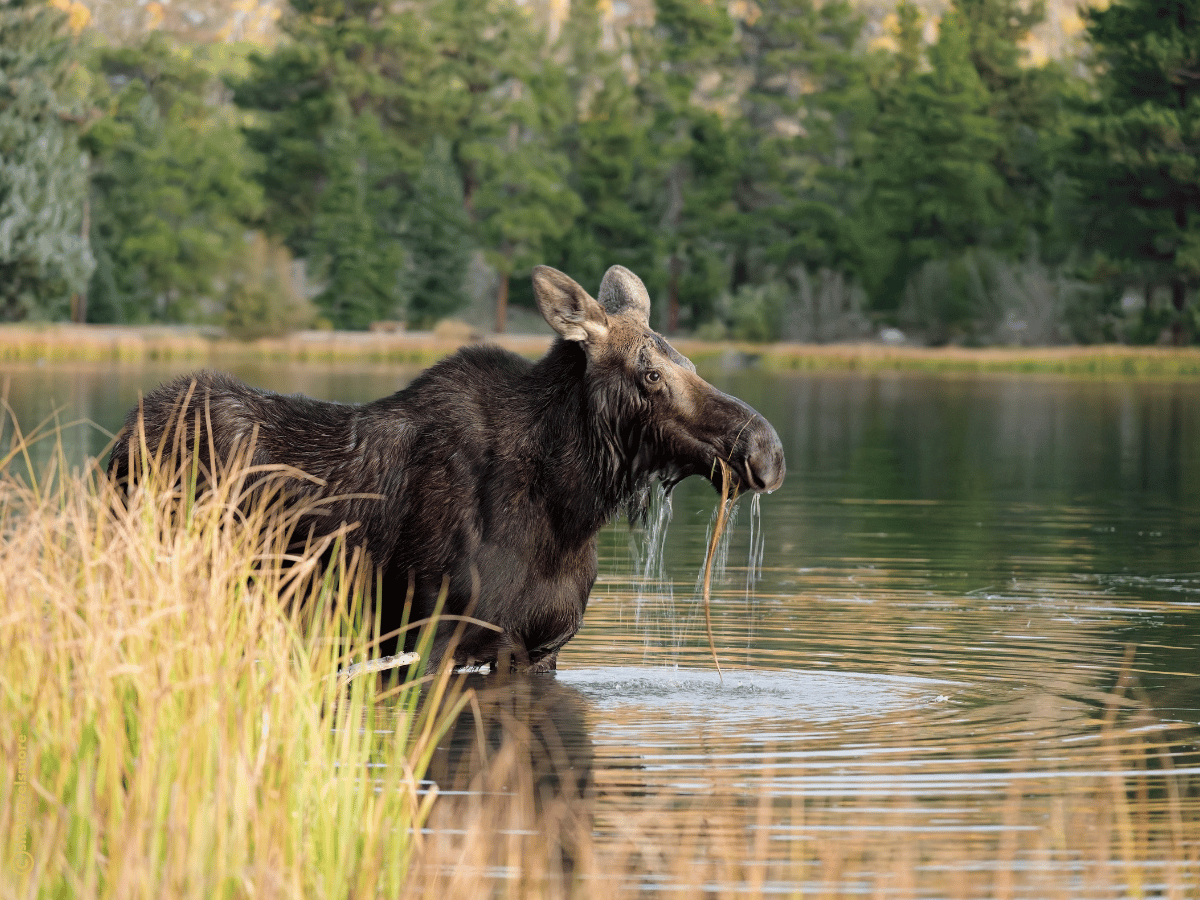
Flat, accessible loop around the lake, about half a mile. The reflection of the Continental Divide in the water is what brings the photographers, but what made it unforgettable for us was the moose. We got there in the dark and he was already standing knee deep in the lake, feeding on aquatic plants off the bottom. Nobody said a word. It was the single best wildlife moment of the entire trip.
Tip: Be parked 30 minutes before sunrise, not at sunrise. Keep quiet. And keep your distance from the moose. They’re far more dangerous than they look standing still in a lake.
4. Hike to Emerald Lake via Nymph and Dream Lakes
This is the classic Bear Lake corridor hike and it earns the reputation. The trail starts at Bear Lake and threads through three lakes, each one more dramatic than the last. Nymph is fringed with lily pads, Dream sits in a granite bowl, and Emerald is tucked under Hallett Peak at the end. About 3.6 miles round trip, moderate, and gorgeous.
Tip: Start before 8 a.m. or take the free Bear Lake shuttle. The parking lot fills up early and once it does the rangers close the road. Midweek is dramatically less crowded than a weekend.
5. Stop at the Alpine Visitor Center at 11,796 Feet
The highest visitor center in the National Park System. It sits right where Old Fall River Road meets Trail Ridge Road and has a café, a gift shop, and a viewing terrace that looks out across miles of alpine tundra. Walk up the stairs behind the building for the full basin view, slowly, because you will feel the altitude. Even standing still at 11,796 feet gets your heart rate up.
6. Spend an Evening in Estes Park
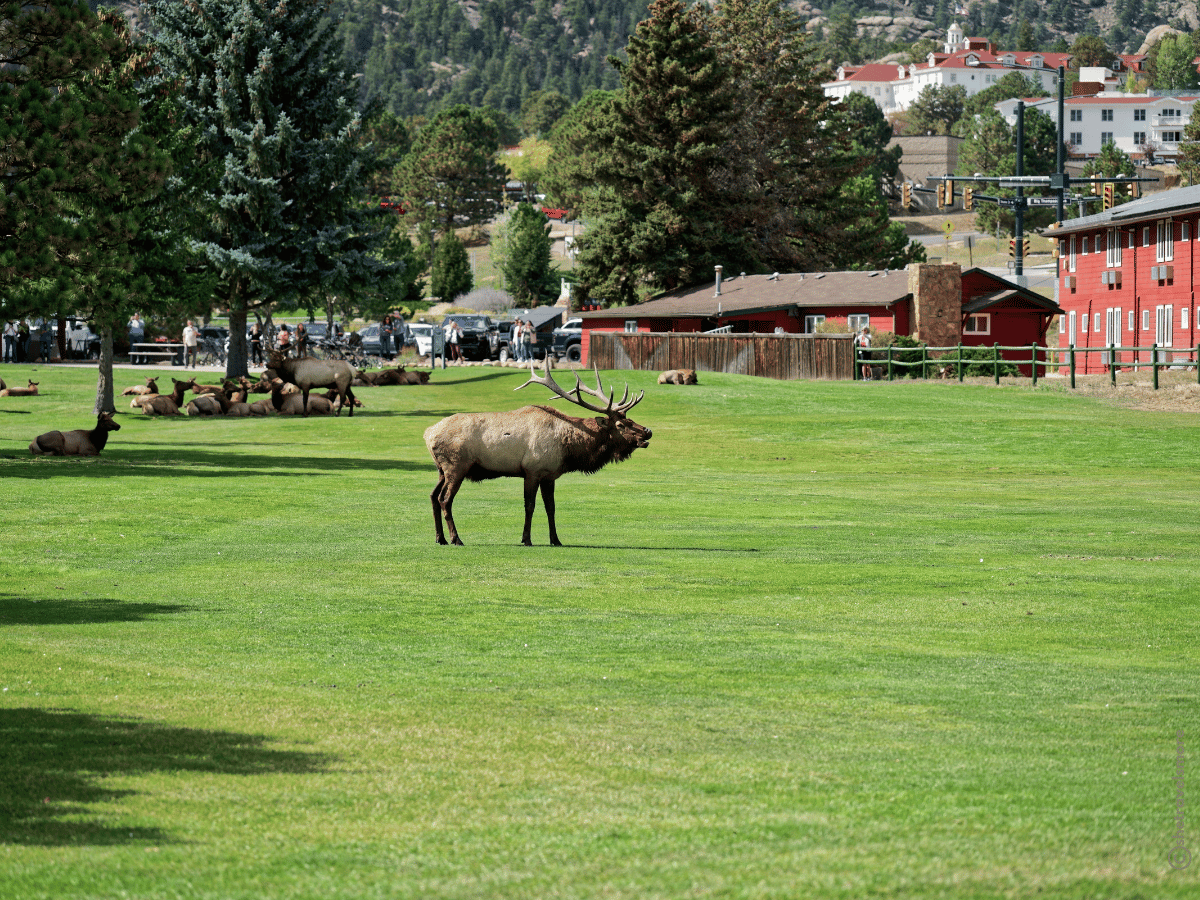
Not just a gateway, a genuine mountain town. Wooden storefronts, local restaurants, lake views, and in fall, elk wandering through main street with total indifference to traffic. A 700 pound bull with a rack the size of a patio chair will stroll across four lanes at his own pace and he is not asking anyone’s permission. It’s absurd, it’s wonderful, and it’s free.
► Click here for our full guide on where to stay in Estes Park
7. Look for Bighorn Sheep at Sheep Lakes
A flat meadow at the entrance to Horseshoe Park, named for the bighorn sheep that come down to the water. Pull over, look through binoculars, and wait. It’s a five minute stop that might turn into thirty. Rangers sometimes set up scopes here in summer and help visitors spot them on the hillsides.
8. Visit Grand Lake on the West Side
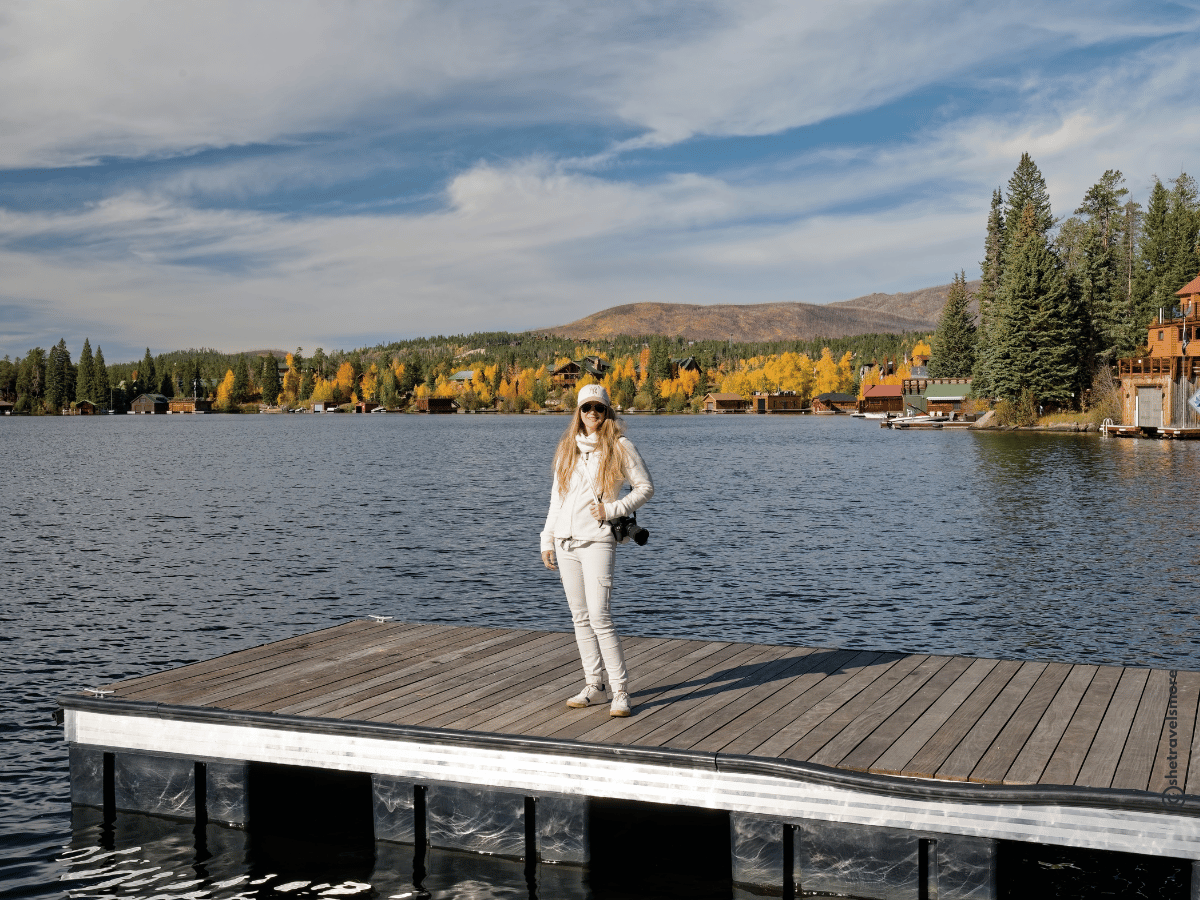
Colorado’s largest natural lake, sitting right at the west entrance in gold fall forest. Wooden boardwalk along the water, a quiet main street, mountains reflected in the lake. Far better for moose than the east side, and a fraction of the traffic Estes Park gets. We stopped for twenty minutes and regretted it immediately. It deserved a night, not a coffee stop. Next trip, we’re booking one.
9. Walk Around Bear Lake (If the Timing Is Right)
Emerald green, ringed with spruce, Hallett Peak behind it. The most photographed spot in the park and genuinely beautiful. I’m putting it at number 9 not because it isn’t good, but because we went on a fall weekend and it was so packed we skipped it entirely. If you can come on a Tuesday morning before 8 a.m. it’s a different experience. The loop is flat and about 0.8 miles. Do it early or not at all.
2 Hidden Gems in Rocky Mountain National Park That Most Visitors Miss
Hidden Gem #1: Drive Old Fall River Road Instead of Trail Ridge Road
Everyone knows Trail Ridge Road. Almost nobody realizes there’s a second road running roughly parallel to it, and that it’s older, wilder, and far more fun. Old Fall River Road was built between 1913 and 1920 and was the first road ever pushed over the Continental Divide inside the park. It’s unpaved, narrow, one way uphill only, no guardrails, and 9.4 miles of gravel switchbacks to Fall River Pass.
Drive up the dirt road and come back down Trail Ridge Road. It’s the best combination in the park and it costs nothing extra. Stop at Chasm Falls about a mile in. We skipped the walk that day and I’ve thought about it ever since. Don’t make my mistake.
Tip: Open early July to mid October only. Speed limit 15 mph, nothing over 25 feet, no trailers. Once you start at the bottom there is no turning around.
Hidden Gem #2: Saint Catherine’s Chapel on the Rock
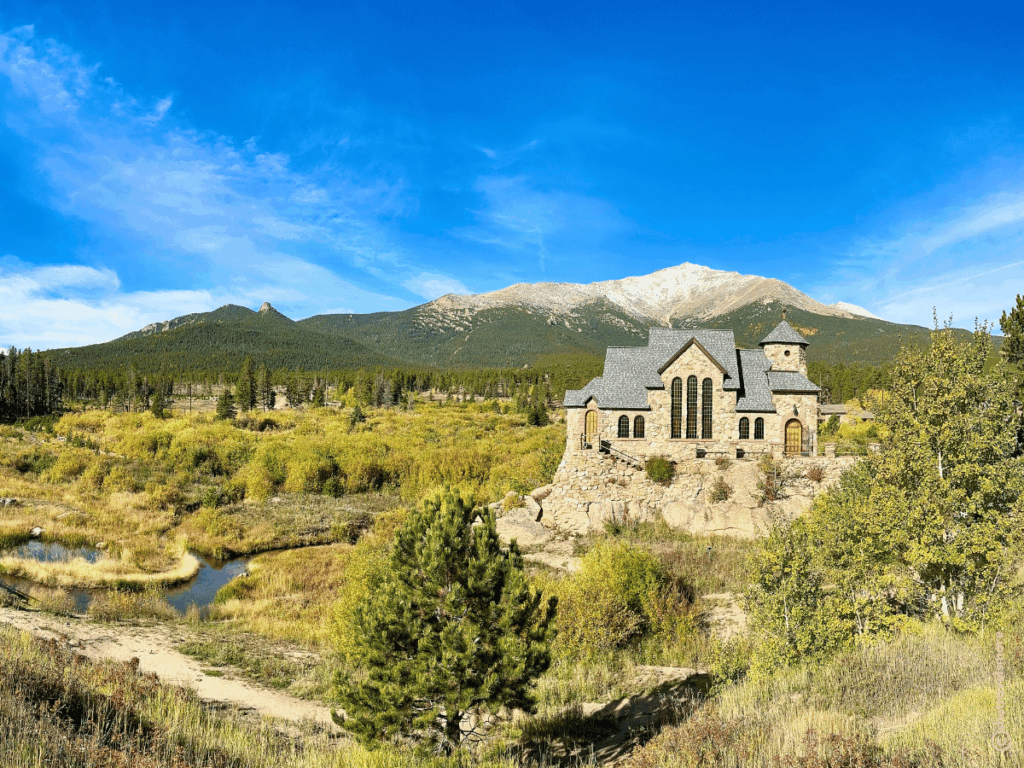
Not inside the park, but on the way in. Just before Estes Park on Highway 7, this tiny chapel from 1936 grows out of a granite outcrop with 14,259 foot Longs Peak behind it. Rock, chapel, mountain range, gold leaves in fall, all stacked in one frame like somebody composed it on purpose. It’s a fifteen minute stop that sticks with you like a much longer one. Free, small parking lot right there.
What You Can Honestly Skip at Rocky Mountain National Park
Bear Lake on a weekend. Beautiful, yes. Worth fighting sixty other people for a parking spot at 8 a.m.? No. Come midweek or take the shuttle.
The souvenir shops on Estes Park main street. They all sell the same things. Walk past them and find the restaurants and the lake instead.
Trying to see everything in one day. A day trip from Denver gets you Trail Ridge Road and maybe one lake. The best moments in this park happen before sunrise, and those require sleeping in Estes Park the night before.
► Click here for my full 3 day itinerary so you don’t miss the good stuff
Quick Guide to Permits and Timing
Rocky runs on a timed entry permit system from late May through mid October. Two types: one for Bear Lake Road (5 a.m. to 6 p.m.) and one for everything else (9 a.m. to 2 p.m.). The Bear Lake ones sell out within minutes on peak dates. Be at your computer the moment they drop or you’ll miss the early slots.
Permits release monthly at 8:00 a.m. Mountain Time on Recreation.gov. There’s a second chance release at 7:00 p.m. the evening before for next day slots. A permit is not an entrance pass. You still need a park pass: $35 per vehicle for seven days, or $80 for America the Beautiful.
One workaround worth knowing: guided tour groups enter without a timed entry permit. So booking a tour through GetYourGuide* can be a real solution on a sold out day.
Get Ready for Your Trip to Colorado
Book Your Accommodation
For Estes Park and Grand Lake I use Booking.com*. I also cross check on Hotels.com* and Expedia*, because Estes Park has limited inventory in foliage season. For cabins and group stays, check Vrbo*. Compare rates across all platforms on Kayak*. I also check Agoda*.
Book Your Flights and Rental Car
For flights and rental cars into Denver I compare on Kayak*. Book the car early for fall, because Denver runs tight in foliage season.
Book Tours and Activities
For guided hikes and wildlife tours, GetYourGuide* is where I look first. Guided groups get into the park without a timed entry permit, so a tour can save a trip on a sold out day.
Advertising: affiliate links. No extra cost to you.
Best Things to Do in Rocky Mountain National Park: Frequently Asked Questions
⛰ What is the number one thing to do in Rocky Mountain National Park?
Drive Trail Ridge Road. It’s free with your park pass, it’s accessible to anyone with a car, and crossing the Continental Divide at 12,183 feet is an experience you won’t get at any other national park in the lower 48. In September, pair it with the elk rut in Moraine Park and you’ve got two of the best wildlife and scenic experiences in the country on the same day.
🚶 What can you do in Rocky Mountain National Park without hiking?
A lot. Trail Ridge Road is a drive. Sprague Lake is a flat half mile loop. The elk in Moraine Park are visible from the road. Old Fall River Road is a scenic drive on gravel. The Alpine Visitor Center is a building you walk into. Grand Lake is a town with a boardwalk. You can have an incredible multi day trip here without any serious hiking at all.
📅 How many days do you need for Rocky Mountain National Park?
Three days and two nights is the sweet spot. One day gets you Trail Ridge Road and maybe one lake. Three days gets you sunrise wildlife, the elk rut, both mountain roads, and a proper evening in Estes Park. More than three and you’re into serious hiking territory, which is a different kind of trip.
🦌 What animals can you see in Rocky Mountain National Park?
Elk are close to guaranteed in Moraine Park and Horseshoe Park year round. Moose are common at Sprague Lake at sunrise and on the west side. Bighorn sheep come to Sheep Lakes regularly. Mule deer are everywhere, including downtown Estes Park. In September and October the elk rut adds bugling, fighting bulls, and some of the best wildlife viewing on the continent.
🍂 What is the best month for Rocky Mountain National Park?
For me, late September. Elk rut, golden aspens, both mountain roads still open, and thinning crowds. Late June is the runner up for wildflowers and full access. I wrote a full month by month breakdown here.
Final Thoughts on the Best Things to Do in Rocky Mountain National Park
The famous spots are famous for a reason and you should absolutely do them. But the moments I think about most are the ones almost nobody plans for: a moose in a lake before sunrise, a gravel road from 1920, a chapel growing out of a rock with a 14,000 foot peak behind it. The park rewards people who show up early and look past the top five.
Book the permits early, set an alarm, and give the park more than one day. Check availability in Estes Park here*, because fall books out earlier every year. Happy travels.
Check Out My Other Colorado Travel Guides
Rocky Mountain National Park 3 Day Itinerary: What I Loved and What I’d Do Differently
Best Time to Visit Rocky Mountain National Park: And When I’d Go Again
Is Rocky Mountain National Park Worth Visiting: My Honest Review
Where to Stay in Estes Park: My Top Lodges and Hotels
Colorado Travel Guide: Best Road Trips and Mountain Towns